 info@demash-industry.com
 TPU: A New Dimension of Flexibility – Where Softness Meets Strength and Printability
When rigid materials can no longer meet your needs for flexibility, cushioning, sealing, or wearability, the world of 3D printing requires a soul that can bend, stretch, and absorb impact. Yet, traditional flexible materials are often approached with caution by many creators due to their difficulty to master.
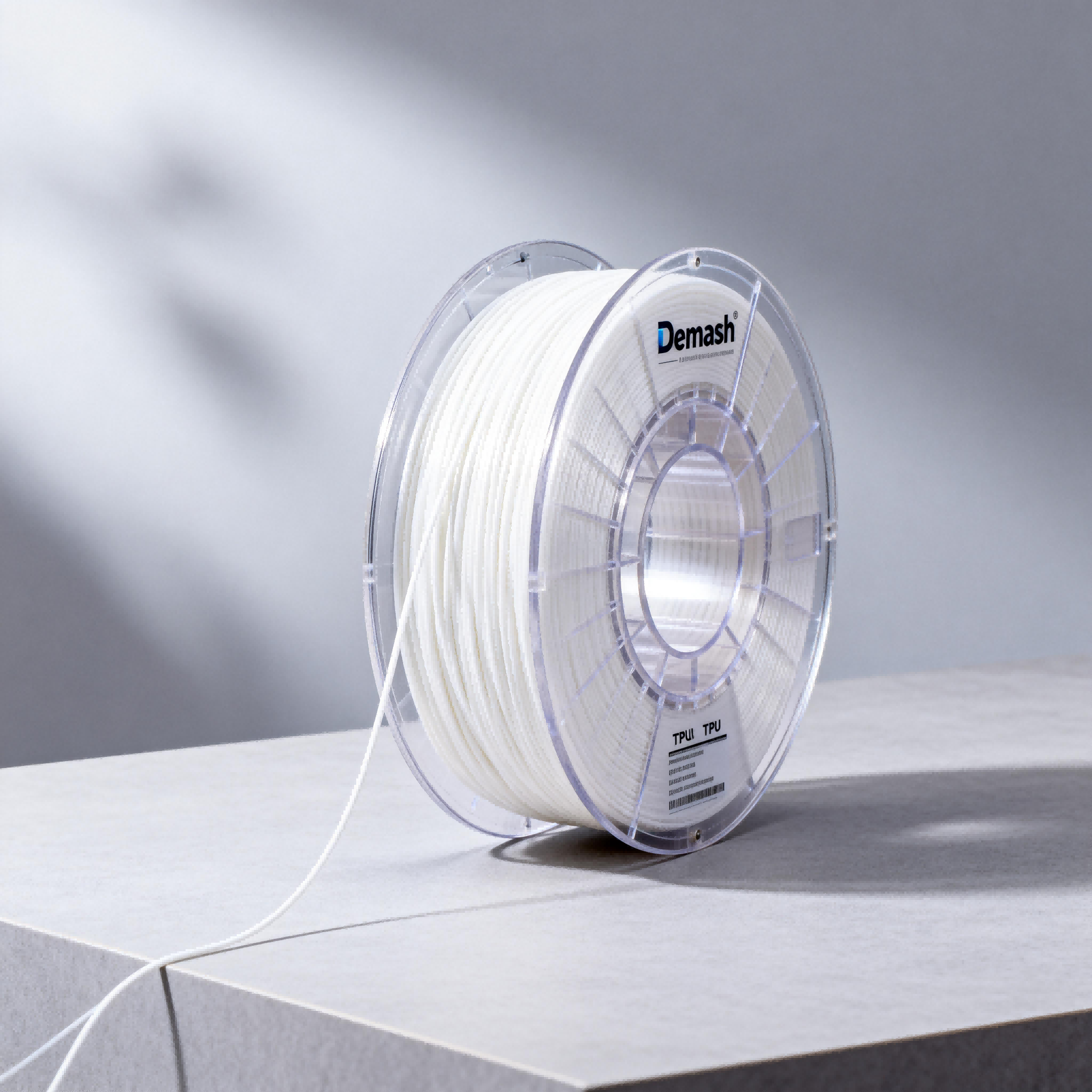
Now, we present a game-changing solution: TPU. This is not an ordinary flexible filament, but a precisely formulated medium-hardness thermoplastic polyurethane elastomer. It perfectly balances exceptional elastic recovery with surprisingly excellent printing stability, designed specifically to make flexible printing simple and reliable.
Core Advantages: Flexible, Yet Remarkably Controllable
-
Superior Elasticity, Unlimited Functional Potential
TPU material offers outstanding flexibility and high rebound elasticity, capable of withstanding repeated bending, compression, and stretching while quickly returning to its original shape. It brings entirely new properties like dampening, sealing, wrapping, and deformation – unachievable with rigid plastics – into the realm of 3D printing, opening another door for functional innovation. -
Excellent Printability, Farewell to “Spaghetti” Troubles
Unlike many overly fluid and hard-to-control flexible materials, this TPU is specially modified to maintain moderate melt strength. It demonstrates resistance to stringing, oozing, and offers stable layer deposition during printing, significantly reducing the risk of nozzle clogs and filament slippage in the feeder. Printing with elasticity no longer needs to be a frustrating challenge. -
Broad Compatibility, Unlock Your Mainstream Printer’s Potential
It is engineered to optimize performance on the vast majority of available Direct Drive 3D printers on the market. Without complex modifications or extreme parameter tuning, you can reliably produce high-quality flexible parts on common desktop machines, dramatically expanding the capability frontier of your existing equipment.
Key Product Specifications (Aligned with Kexcelled TPU Performance Standards)
-
Material Type: Thermoplastic Polyurethane Elastomer (TPU)
-
Hardness (Shore A): 95A (Medium hardness, balancing flexibility and support)
-
Filament Diameter: 1.75mm ± 0.03mm (High consistency for stable feeding)
-
Nozzle Temperature: 210°C – 230°C (Recommended: 220°C)
-
Bed Temperature: 30°C – 60°C (Recommended: 40-50°C, or use painter’s tape)
-
Print Speed: Low speed recommended. 20-40 mm/s for optimal results.
-
Retraction: Recommended ON, but keep distance short (0.5-1.5mm) and speed moderate.
-
Cooling Fan: Can be enabled at low to medium speed (30-70%) to improve surface quality and overhangs.
-
Shrinkage: Extremely low, high dimensional accuracy.
-
Print Features: Slightly glossy surface, comfortable feel, good abrasion and oil resistance.
-
Spool Specification: 1KG vacuum-sealed with desiccant.
-
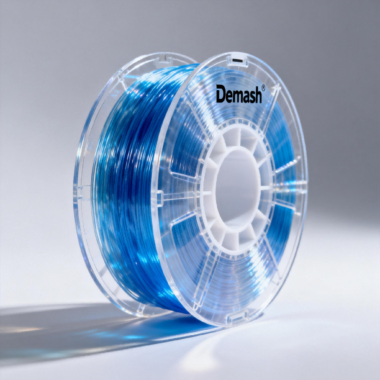
Color Options: Transparent, semi-transparent, and various solid colors available.
Pioneering Application Scenarios
-
Functional Components: Shock absorbers, non-slip feet, gaskets, hose connectors, suspension parts.
-
Wearable Devices: Watch straps, glasses temple tips, custom phone cases, sports gear cushions.
-
Creative & Lifestyle: Flexible toys, wrist rests, bicycle grip covers, custom insole prototypes.
-
Industrial Prototypes & Jigs: Protective jigs, soft grippers, non-standard cushioning liners.
-
Model Enhancements: Bumpers, tires, or tracks for RC cars and robot models.
Printing Recommendations & Compatibility
-
Printer Type: Strongly recommended for Direct Drive extruders. For Bowden extruders, significant parameter optimization and a perfectly smooth filament path are required, posing a greater challenge.
-
Hotend Recommendation: An all-metal heat break or a durable PTFE liner is advised to handle the constant friction of flexible filament.
-
Printing Tips: For first prints, start with recommended temperature and low speed. Ensure the drive gear is clean and tension is properly set. Use a flat build surface and ensure excellent first layer adhesion.
Choosing this TPU means you can confidently explore the limitless possibilities of the flexible world without being a materials expert. It transforms the daunting task of flexible printing into a stable, reliable, and enjoyable creative process.
Try TPU now and let your designs break the boundaries of rigidity, embracing a future that is both soft and strong